815-727-0100


Can You Get a DUI for Driving on Prescription Medication?
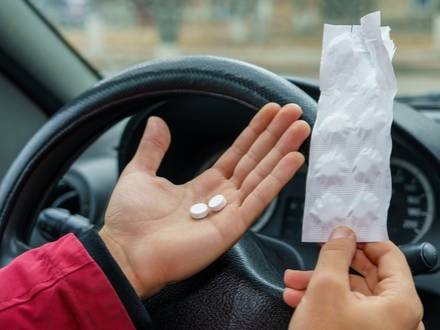 When you envision a "standard" DUI charge, the image that comes to most people’s minds is someone who had one too many drinks before operating a vehicle. However, this is not the only circumstance in which you can be charged with DUI. If a prescription medication impacts your ability to drive, it could lead to a DUI charge in Illinois.
Getting arrested for a DUI after taking legally prescribed medication can be distressing. At McNamara Phelan McSteen, LLC, our Joliet, IL criminal defense attorneys are here to help. Our attorneys have over 150 years of combined experience, so when you work with us, you can trust that your case will be handled by a knowledgeable firm.
What Is the Definition of DUI in Illinois?
In Illinois, driving under the influence does not only apply to alcohol. The law also covers drugs, including prescription medication. Under Illinois law, a person commits DUI when he or she drives or is in actual physical control of a vehicle while under the influence of alcohol, drugs, or anything else intoxicating in a way that makes them incapable of driving safely (625 ILCS 5/11-501).
That language is important. The law does not say the drug must be illegal. It does not say the driver must be abusing medication. It focuses on impairment. If a prescribed medication affects a person’s ability to drive safely, a DUI charge can follow.
Many people assume that if a doctor prescribed the medication, they cannot be charged. That is not true. Even when a person takes medication exactly as directed, he or she can still face DUI charges if the medication causes impairment when they are behind the wheel.
Prescription Drugs That Can Result in DUI Charges
Prescription medications can affect people in different ways. Some people feel fine. Others experience strong side effects. It often depends on the dosage, the person’s age, and how the body reacts. Many medications list warnings about driving or operating heavy machinery. These warnings are there for a reason. Dangerous side effects may include:
- Drowsiness
- Slowed reaction time
- Blurred vision
- Dizziness
- Confusion
- Impaired coordination
These symptoms can make it hard to stay in a lane, judge distance, or react to sudden stops. Even mild side effects can become dangerous at highway speeds. A person might not even realize how impaired he or she is. Fatigue can creep in slowly. Focus can drift. A driver may believe he or she is in control, but small mistakes can attract police attention.
It is also important to understand that combining medications can increase side effects. Mixing prescriptions with alcohol can make the impact even stronger. In those cases, prosecutors may argue that the driver should have known the risks.
Still, not every driver who takes prescription medication is impaired. The presence of a drug in the body does not automatically prove a DUI. The state must show actual impairment.
How Serious Is a DUI Charge in 2026?
A DUI charge in Illinois is serious, even for a first offense. In most cases, a first-time DUI is a Class A misdemeanor. That means the penalties can include up to 364 days in jail and fines of up to $2,500.
A first conviction also carries a mandatory minimum fine and court costs. Community service is common. In addition to criminal penalties, there are driver’s license consequences. After a DUI arrest, the Illinois Secretary of State may impose a statutory summary suspension. This suspension can begin before the criminal case is resolved. The length of the suspension often depends on whether the driver submitted to chemical testing or refused it.
Evidence of Impairment in Prescription DUI Cases
In alcohol DUI cases, police often rely on breath tests. Prescription drug cases are different. There is no simple roadside machine that measures impairment from most medications. Officers usually look for driving behavior first. Swerving, drifting between lanes, or delayed responses at traffic lights may lead to a stop. After that, officers often rely on field sobriety tests.
Field sobriety tests can include walking in a straight line, standing on one leg, or following a pen with the eyes. These tests are designed to measure balance and coordination. However, many factors can affect performance. Uneven pavement, poor lighting, nerves, or medical conditions can all impact the results.
Prescription medications can also affect balance in ways that are not obvious. Some people have back injuries or knee problems. Others have anxiety that worsens under stress. Failing a field test does not automatically mean a person was impaired by drugs.
Officers may request a blood or urine test. These tests can show the presence of a substance. However, they do not always show how impaired a person was at the time of driving. A medication can remain in the body long after its strongest effects have passed. In court, prosecutors must prove beyond a reasonable doubt that the driver was impaired. Our defense attorneys may challenge the reliability of field tests, the accuracy of chemical testing, and the officer’s observations.
Fourth Amendment Rights in DUI Traffic Stops
The Fourth Amendment protects people from unreasonable searches and seizures. This protection applies during DUI traffic stops.
An officer must have a lawful reason to pull a driver over. That reason may be a traffic violation, such as speeding or failing to signal. It may also be observable signs of impaired driving. A stop based only on a vague hunch is not enough. Drivers also have rights regarding searches. Police generally need consent, probable cause, or a warrant to conduct certain searches. Chemical testing may fall under Illinois implied consent laws, but there are still legal limits on how and when tests are administered.
If police violate a driver’s Fourth Amendment rights, evidence obtained during the stop may be suppressed. That can weaken or even dismiss the case.
Contact a Will County, IL DUI Defense Attorney
If you were arrested in Will County, it is important to act quickly. Deadlines apply to license suspensions. Early action can protect your driving privileges and strengthen your defense. An experienced defense attorney can review the traffic stop, examine the testing procedures, and challenge weak evidence.
At McNamara Phelan McSteen, LLC, we will listen to your concerns and help you understand your options moving forward. Call 815-727-0100 or contact our Joliet, IL criminal defense lawyers to schedule a free consultation today.







|815-727-0100


Results listed are not a guarantee or indication of future case results.


Contact Our Firm
 The use of the Internet or this form for communication with the firm or any individual member of the firm does not establish an attorney-client relationship. Confidential or time-sensitive information should not be sent through this form.
I have read and understand the Disclaimer and Privacy Policy.